Your Complete Guide to Hummingbirds in Florida
From feeder care to native plants, everything you need to attract and keep hummingbirds in your backyard, all year long.
From feeder care to native plants, everything you need to attract and keep hummingbirds in your backyard, all year long.
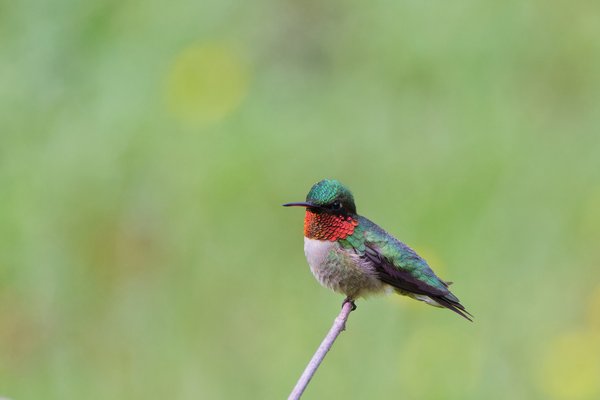
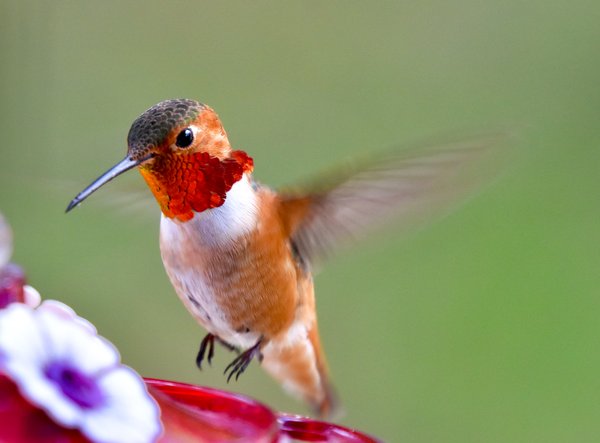
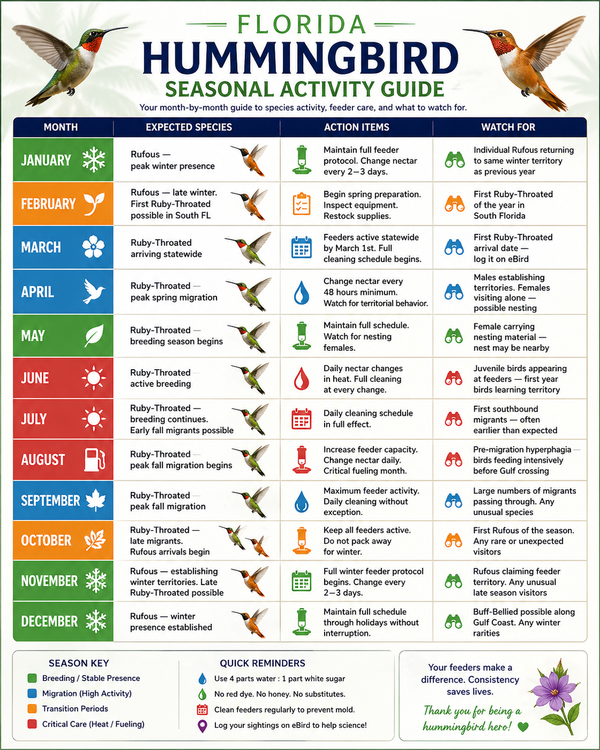
Florida is one of the few states where you can see hummingbirds in every season. The Ruby-Throated Hummingbird is by far the most common, arriving in spring and passing through in fall migration. But Florida feeders also host Rufous Hummingbirds in winter, and along the Gulf Coast you may spot the Buff-Bellied Hummingbird. In South Florida, hummingbirds can appear any month of the year. The key to knowing what's at your feeder is learning the differences in size, color, and behavior between species. Male Ruby-Throats have that unmistakable iridescent red gorget. Rufous birds are smaller and rusty-orange with a feisty, territorial personality.
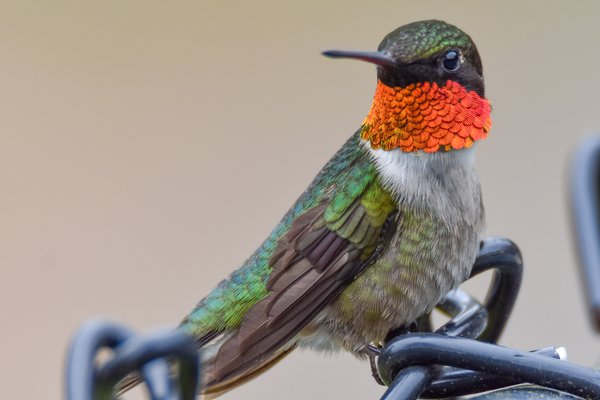
The most common in Florida, easy to recognize by the male’s red iridescent throat and lively flight.
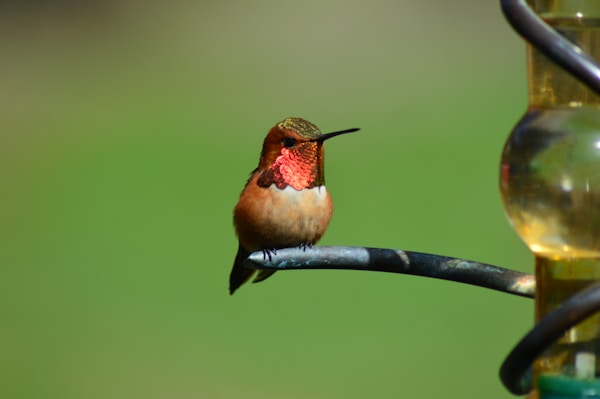
Smaller and rusty-orange with a bold attitude; seen wintering at feeders, especially in cooler months.
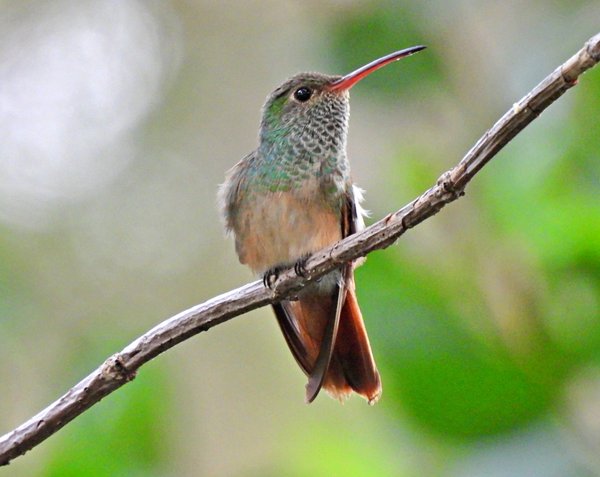
More rare, often spotted along the Gulf Coast, olive backs and buffy bellies set them apart from others.
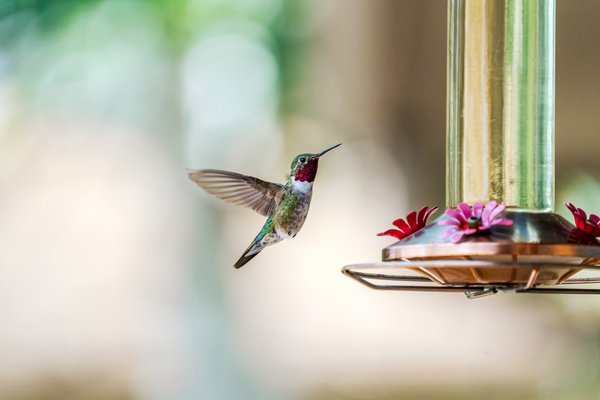
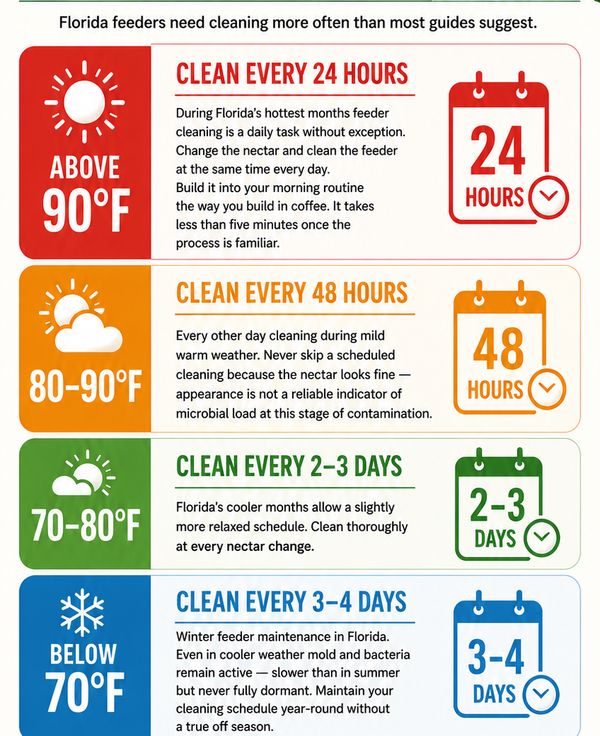
More often than you think, especially in summer. In Florida's heat and humidity, nectar can ferment in as little as 24-48 hours during the hottest months. Fermented nectar can make hummingbirds sick. A simple rule for Florida: Summer (80°F+): Clean every 1-2 days. Spring/Fall: Every 2-3 days. Winter cool spells: Every 3-4 days. The easiest fix is switching to a saucer-style feeder, every nectar-contacting surface is fully accessible with a quick rinse. Clean with hot water and a bottle brush. Skip the soap, residue can harm the birds.
Summer (80°F+): Clean every 1-2 days
Spring/Fall: Every 2-3 days
Winter cool spells: Every 3-4 days
Use hot water and a bottle brush — avoid soap
Switch to saucer-style feeders for easier cleaning
Native plants are the single best thing you can add to your yard for hummingbirds. Top Florida native plants: Firebush, orange-red tubular flowers, blooms nearly year-round. Coral Honeysuckle, scarlet trumpet flowers, evergreen in Central and South Florida. Scarlet Sage, easy to grow, blooms spring through fall. Coral Bean, striking red flower spikes in spring. Trumpet Creeper, large orange-red blooms, hummingbird magnet. Red and orange tubular flowers are your target. Plant a mix that blooms at different times and you'll have activity from early spring through late fall.
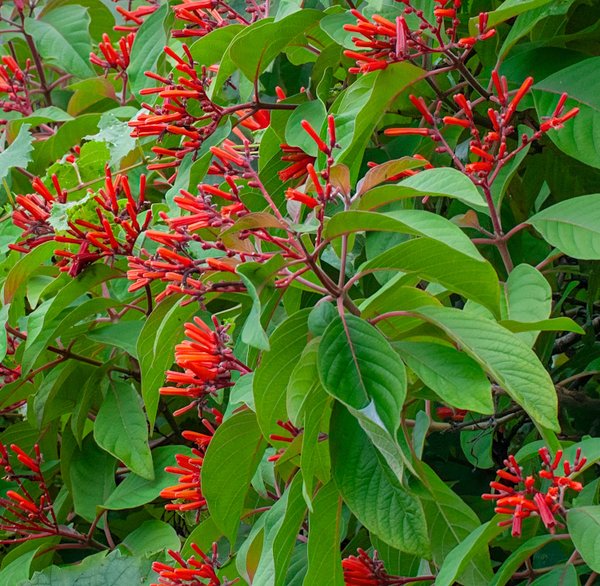
Orange-red tubular flowers that bloom nearly all year and are irresistible to hummingbirds.
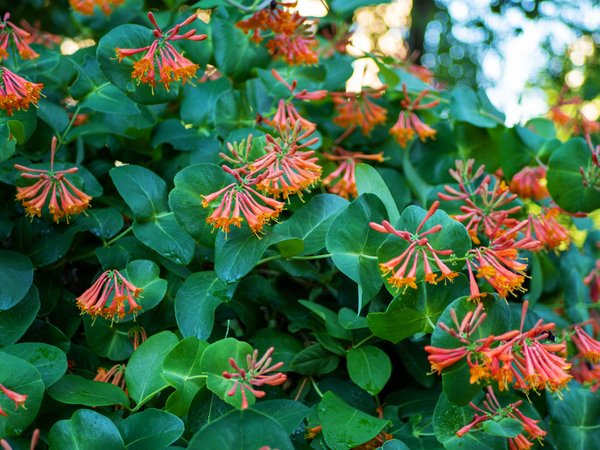
Scarlet trumpet flowers, evergreen in warmer regions of Florida and a reliable source of nectar.
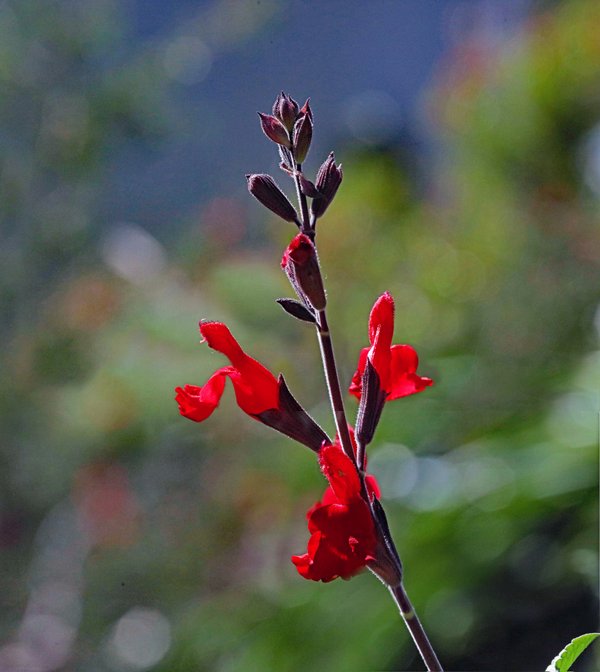
Easy to grow and blooms from spring through fall, providing a red beacon for hungry hummers.
For North and Central Florida, have feeders out by early March. Ruby-Throated Hummingbirds begin arriving in spring and the first migrants need fuel. In South Florida, hummingbirds can appear any month, keeping at least one feeder up year-round is worth it. Don't take feeders down in fall just because activity slows. Rufous Hummingbirds and other winter visitors may show up from October through February, especially along the coasts.
The Backyard Companion is a 295-page hummingbird feeding and field guide written specifically with Florida backyard birders in mind, covering every species you might see, feeder selection, nectar care, native plants, and more.